
Godspeed Clothing: Everything Worth Knowing About the NYC Streetwear Label
The problem begins with the name itself. Search godspeed and the results stretch from a fifteenth-century blessing to an American garage-and-motorcycle business, a New York streetwear label, and some eighteen unofficial sites angling to be that label’s official home. This guide covers the streetwear one: GODSPEED NEW YORK, capitalised across its own storefront, shortened to GODSPEED NYC or simply Godspeed elsewhere. What follows covers what the brand makes, how garments are built, what pieces cost in 2026, where it legitimately sells, and which repeated claims are unsupported. That final point matters: the most-cited version of the brand’s history has no verifiable source. The evidence below is gathered from its own product pages, retailer listings and resale platforms.
What This Brand Really Is
Godspeed is a New York City streetwear brand maintaining a direct storefront in US dollars alongside a wholesale channel into specialist retailers. No head office address is published, and the public identity is carried by product photography, drop pages and graphics rather than corporate messaging. For an independent label, the catalogue is broad: graphic t-shirts through outerwear, denim, headwear and accessories. Rather than seasonal calendars, output is planned around named collections and dated drops, with old drop pages kept archived after they sell out. Aesthetically it belongs to the heavy-graphic, oversized-fit tradition of New York street labels rather than minimal or technical streetwear. If you know the category, the reference points will feel immediately familiar.
An Origin Story That Was Never Published
What matters most here: it does not publish an origin story. The About section of its own storefront holds placeholder Lorem Ipsum text rather than a history, so the brand has never publicly stated a founder or founding godspeed ny streetwear year. You will find confident claims naming a founder and a launch year, but every trail ends at unofficial lookalike sites copying one another, never at the label. Neither retail partners nor editorial coverage supply a verified founding narrative; both describe the product instead. Anyone writing about god speed clothing should treat founder and founding-year claims as unverified. That is an unusual gap for a brand with this much visibility, and admitting it is more useful than filling it with a guess.
The Two Godspeeds Mix-Up
Trap number two is a name collision, and it has caught out professional retailers. Godspeed Co. is a separate, unrelated American company rooted in garage and motorcycle culture, making shop shirts, caps, coffee and home goods, and it names its three founders openly. Beyond the shared word it has nothing to do with the New York streetwear label. This conflation is documented rather than hypothetical: product copy from retailers, attached to the NYC brand’s streetwear, has handed the other company’s founders to it. Once one retailer makes that error, aggregators and resale descriptions copy it forward. A brand biography for godspeed clothing that mentions motorcycles, American-made shop rags or a distributed team is describing the other company.
Design Language: Acronyms, Skeletons, and the City
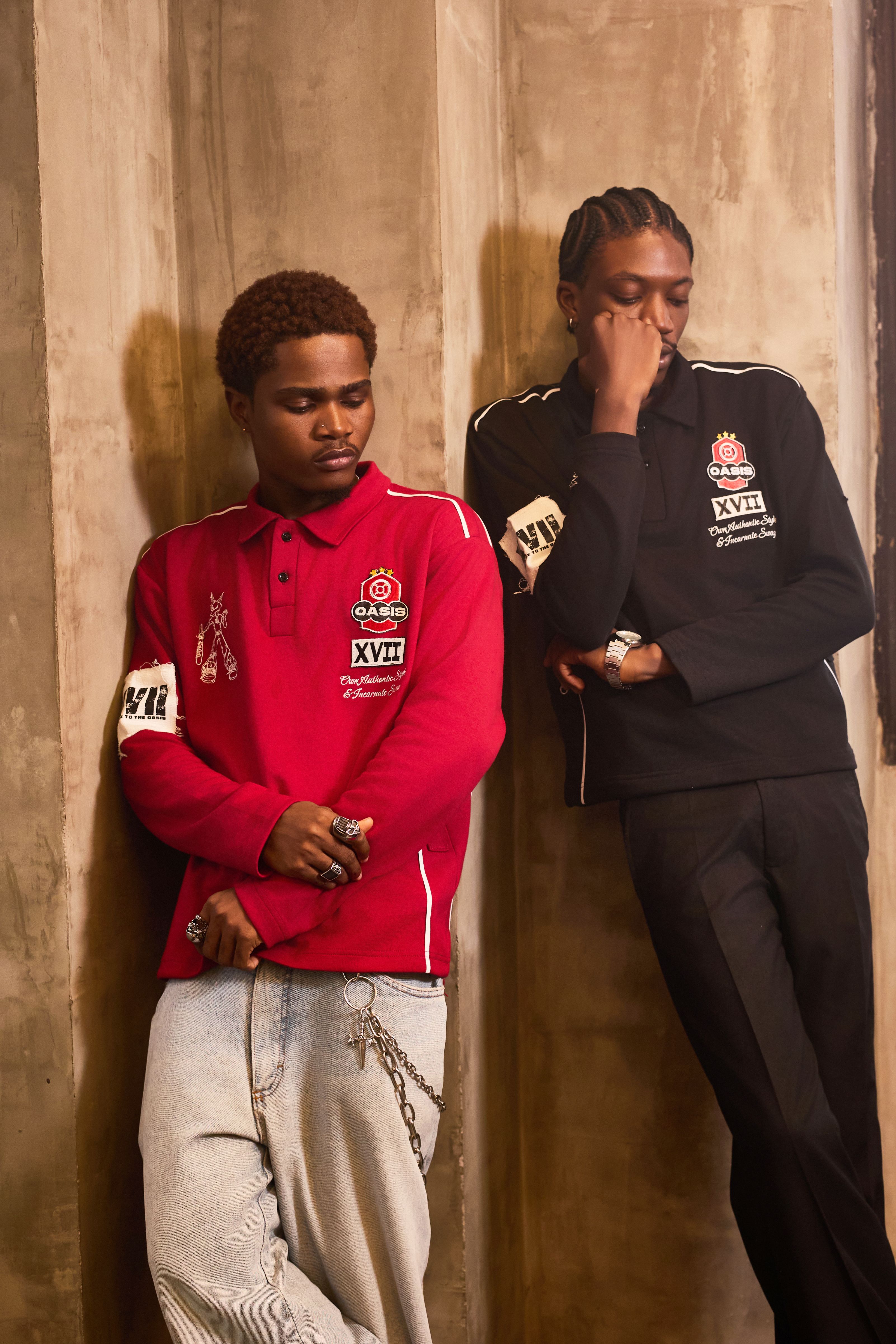
Rather than a single logo, the visual system is built on repeating graphic families. Season after season the same lettered marks appear: R.O.D, I.G.W.T, F.T.D, G.R.C and VVS, together with GS FOREVER and GS 4EVER lockups and an OG Logo script. Because the brand has never published official expansions for those letter marks, anything circulating online is a guess and not a stated meaning. Around those marks cluster the recurring motifs: skeletons and skulls, angelic and religious imagery, New York iconography, and street-life narrative themes. Product naming follows the same tone: Empire Guardian, Liberty Tears, Neighborhood Watch, Mankind vs AI, Mask Off, Code Red, Life’s a Gamble, Militia and Wax Flare. Read together, the names describe a brand more interested in narrative and grit than in logo minimalism.
What the Range Actually Includes
The range is wider than the graphic-tee reputation suggests, which helps when planning a purchase. The line is anchored by tops, though outerwear and bottoms carry the higher prices and the heavier construction. Accessories run deep enough that a full outfit can be built without leaving the label. Categories appear and disappear between drops, which makes availability at any one moment narrower than the catalogue suggests. Sizing skews toward relaxed and boxy cuts across most categories rather than fitted silhouettes. What follows is what has been observed on the brand’s own storefront.
- T-shirts in short sleeve, long sleeve, sleeveless and layered constructions
- Pullover and full-zip hoodies, along with sweatsuits, tracksuits and matching sets
- Cargo, courtside and nylon shorts, along with cargo trousers
- Premium denim: jeans and a denim jacket
- Outerwear: varsity jackets, a leather moto jacket and a puffer
- Jerseys, trucker hats, beanies, belts, slides and watches
How the Pieces Are Made
The pricing starts to make sense once you look at construction. Graphics run to puff print and heavy embroidery rather than thin screens, a meaningful cost difference on a t-shirt. Across the range the garment washes are named Black Wash, Grey Wash and Blue Wash, and they give a broken-in surface out of the bag. Hoodies and sets use heavy fleece rather than mid-weight, and the cuts run boxy and oversized. Wool bodies meet vegan-leather or vegan-suede sleeves on the varsity jackets, while selected shorts, trousers and sweatsuits carry 3M reflective detailing and satin trims. The core palette sticks to black, black wash, bone and grey wash, and the high-contrast accents come in rust, navy, yellow, lime, purple and orange.
Collections, Drops and Limited Editions
Releases are organised by collection, with several collections coming back across drops. Observed examples include SUMMER ’26 COLLECTION 1.0 and 2.0 under the DREAM STATE banner, VITAL, CORE ROTATION, the G.R.C COLLECTION, PREMIUM DENIM, SETS and WATCHES. The rap group The Lox has a named collaboration that runs as its own collection, with a Legacy Trucker Hat carrying Living Off Xperience embroidery. The separate WORLD CUP ’26 CAPSULE is an in-house collection themed on the tournament rather than an officially licensed product. Selected outerwear makes the scarcity explicit: the F.T.D and Chrome Seduction varsity jackets have been described as runs of two hundred units with numbered authenticity tags. The retailer FEATURE, in its editorial coverage, described the release model as deliberately limited, small batches being intended to protect each design.
What Pieces Cost in 2026
The figures that follow are market estimates gathered in 2026 from storefront listings, stockists and resale platforms rather than an official price list. They are ranges, not quotes, because construction varies from category to category. The gap between a plain graphic tee and a long-sleeve layered piece runs to tens of dollars, and hoodies and sets behave the same way. Outerwear pricing is the hardest to pin down, since several jacket pages were already sold out when observed. A single eBay ask of $595 for a varsity jacket is a seller’s marketplace price rather than retail. StockX resale carried roughly forty apparel entries, with lowest asks running approximately $75 to $297.
| Type | Observed 2026 range (USD) | Detail |
|---|---|---|
| Tees | $128-200 | Most land $150-170; sleeveless about $170, long sleeve as high as $200 |
| Hoodies | ~$200-270 | Seeing Double $200; R.O.D hoodie $270 retail per StockX |
| Sweatsuits and sets | $155-360 | Vital sets $155, OG Logo Sweatsuit V2 $295 |
| Shorts | $120-200 | Courtside $120; OG Logo Nylon $130; Militia Cargo V3 $140 |
| Cargo trousers | ~$350 | Wax Flare Premium, carrying 3M detailing |
| Denim | ~$250 | Infinity Denim V2, with the GS 4Ever denim jacket also at $250 |
| Headwear | $60-150 | Beanies $60-120; GS Forever trucker $125-150 |
| Accessories: belts, slides, watches | $80-250 | Belts $250, slides $160, watches $80-100 |
Where It Sells and Where the Risk Sits
Its own webstore is the primary channel; a wholesale programme puts stock into a defined retailer set. Observed stockists include FEATURE, TAKOUT NY, Tops and Bottoms USA, Civilized Nation, Premium Lounge NY, NRML in Ottawa, Farfetch and GOAT. On the secondary market it has a StockX brand page, a Grailed designer page and steady eBay activity, where sold-out drops resurface. The hazard is the cluster of roughly eighteen lookalike sites presenting themselves as the official store while recycling the same unsourced brand history. Not one speaks for the label, and the biography they all repeat is the unverifiable founder claim. Stick to the brand’s own webstore or a named stockist, and be suspicious of any other site claiming official status.
Who Should Actually Buy It
Judged on verifiable evidence rather than marketing, this is a graphics-led New York label selling heavyweight, boxy, print-and-embroidery pieces at contemporary streetwear prices. If you want a godspeed hoodie or a run of godspeed shirts, you are paying for puff print, embroidery, garment washing and small batch sizes rather than for technical fabric or tailoring. Buyers who want a documented brand narrative will find its absence frustrating, and that is a legitimate reason to look elsewhere. For buyers focused on the graphic and the make, the offer holds up across categories. Limited-run outerwear makes the strongest scarcity case; the cheapest entry point is the t-shirts. Either way, judge the garment in front of you rather than the history attached to it online.